
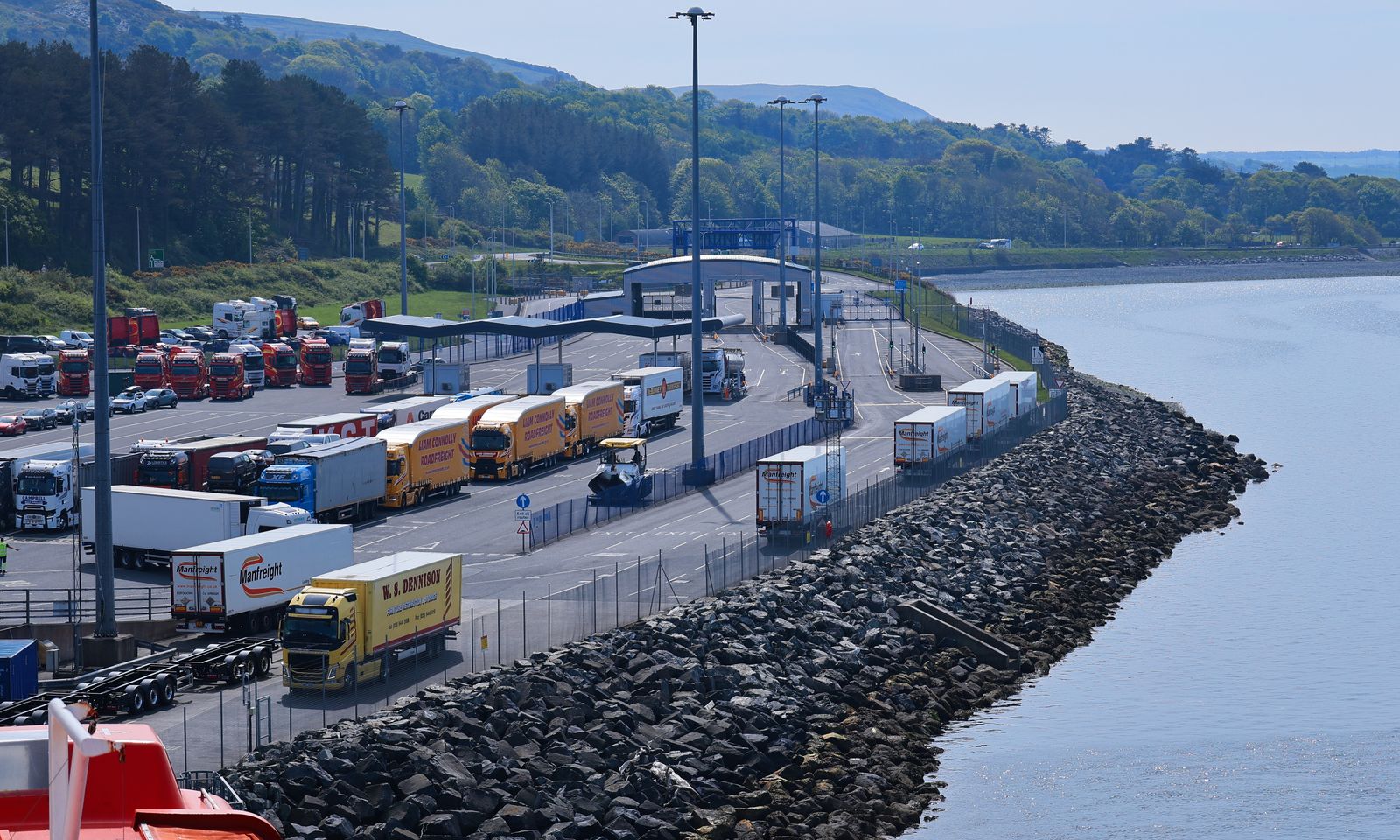
EU Import and Export Clearance
Declarations on both sides of the Channel, handled by one team
Since the UK left the EU customs union, every movement between Great Britain and the EU needs a full customs declaration in both directions. GEIM submits the declarations on both the UK and the European side, so one shipment does not become two separate customs problems.
- 30 min Typical quote response
- 24/7 Every day of the year
- 7 Languages spoken in-house
Moving Goods Between the UK and the EU
Before 2021, goods moved between the UK and the EU with no customs formalities at all. That is no longer the case. A single lorry leaving Great Britain for the EU now needs a GB export declaration, an EU import declaration, a transit document if it is crossing more than one customs territory, and a Goods Movement Reference before it can board.
Each of those is filed with a different authority, under different rules, and a delay in any one of them stops the whole movement. Businesses that trade in both directions are managing two customs regimes at once, usually without a dedicated customs team on either side.
GEIM submits the declarations on both the British and the European side, so a GB-EU movement is managed as one job rather than handed off halfway.

What a GB-EU Movement Involves
Every movement between Great Britain and the EU passes through the same sequence, whichever direction it is travelling. The detail changes with the goods, the route and the member state, but the shape does not.
Export declaration on the departure side
Goods leaving Great Britain need a GB export declaration submitted to HMRC through CDS before they reach the port. Goods leaving the EU need the equivalent filed in the member state of departure. This establishes that the goods have legally left the customs territory and is what evidences zero-rating for VAT.
Import declaration on the arrival side
The receiving customs authority needs a full import declaration covering classification, customs value, origin and the procedure being claimed. Duty and import VAT are assessed against that declaration. In the EU this is filed in the member state of entry, which is not always the country of final delivery.
Goods Movement Reference for the UK border
Most GB ports run the Goods Vehicle Movement Service. The haulier needs a GMR linking every declaration on the vehicle before they can board, and without it the driver is turned away at check-in rather than at the border.
Transit where the goods cross more than one territory
A T1 or T2 opens a transit movement so goods can travel under customs control without duty becoming payable at each crossing. It must be discharged correctly at the destination office, and an unclosed transit leaves a liability sitting against the guarantee.
Safety and security declarations
Entry and exit summary declarations carry the risk data customs authorities use to decide what to inspect. They run on their own deadlines, ahead of the goods arriving, and are a common gap for businesses that only think about the duty side.
Proof of origin where a preference is claimed
The UK-EU Trade and Cooperation Agreement allows zero tariffs, but only where the goods genuinely meet the rules of origin and that is properly evidenced. A claim made without the evidence behind it is a liability that can surface years later in an audit.
GEIM can file the GB declarations, arrange the transit, raise the GMR and submit the EU-side entry, so the movement is covered end to end rather than in pieces.

Where EU Movements Go Wrong
The failures on GB-EU traffic are consistent, and almost all of them are avoidable with preparation. These are the ones that cost businesses the most.
Assuming a trade agreement means no paperwork
The Trade and Cooperation Agreement removes tariffs on qualifying goods. It does not remove customs declarations, and it does not remove the obligation to prove origin. Businesses that read "tariff-free" as "formality-free" are the ones whose first shipment stops at the border.
Origin claimed without the evidence
Preferential origin requires the goods to meet specific processing rules, evidenced by a statement on origin or the importer's knowledge. Goods simply shipped from the EU are not automatically of EU origin. Where a claim cannot be substantiated, duty becomes payable retrospectively, with interest.
Incoterms that do not match who is filing
Selling on DDP makes the seller responsible for import clearance and duty in the destination country, which often means needing an EU establishment or a fiscal representative. Agreeing terms without checking who can legally act as importer is a frequent and expensive mistake.
VAT registration in the destination member state
Depending on the terms of sale and where title passes, a UK business may need to register for VAT in the member state of import, or appoint a fiscal representative. This is not discovered at the border; it is discovered when the entry cannot be filed.
Transit left open
A T1 that is not discharged at the destination office stays open against the guarantee. The liability does not disappear, and the first anyone usually hears of it is a demand months later.
Controlled goods treated as ordinary freight
Food, animal products, plants, chemicals and excise goods carry additional certification and pre-notification requirements on entry to the EU. Those requirements sit outside the customs declaration and have their own timings.
How GEIM Works on EU Traffic
We act as the customs team for businesses that do not have one, on both sides of a GB-EU movement.
One point of contact
You deal with the same people for the GB declaration, the transit, the GMR and the EU-side entry, rather than chasing three parties when a lorry is held.
Documents checked before the goods move
Most border problems are visible on paper days beforehand. We review the commercial invoice, classification, origin evidence and licences before the vehicle is loaded, which is when a problem is still cheap to fix.
Cover outside office hours
Border problems do not keep business hours. Our team is reachable around the clock for movements already in progress.
Support in your language
Our team works in English, Polish, Romanian, German, Dutch, French and Spanish, so the haulier and the shipper can both be dealt with directly.
Start Moving Goods Between the UK and the EU Properly
Whether you are importing from the EU into Great Britain, exporting the other way, or running traffic in both directions, GEIM can take the customs side off your desk. Send us a route and what you are moving, and we will tell you what it needs. Send your documentation for the goods as well and we will provide door-to-door customs.
Frequently asked questions
Yes. The UK-EU Trade and Cooperation Agreement removed tariffs on qualifying goods, but it did not remove customs formalities. Every movement between Great Britain and the EU needs an export declaration on the departure side and an import declaration on the arrival side, in both directions. Northern Ireland operates under separate arrangements.
Only where the goods meet the rules of origin set out in the agreement and you can evidence that they do. Goods that were merely shipped from the EU, rather than produced or sufficiently processed there, do not qualify. A preference claimed without supporting evidence can be reassessed later, with duty and interest payable.
That depends on the Incoterms you have agreed. On DDP terms the seller is responsible for import clearance and duty in the destination country, which usually requires an establishment or a fiscal representative there. On DAP terms the buyer handles import clearance. Agreeing terms before checking who can legally act as importer is one of the most common causes of stuck shipments.
Sometimes. It depends on the terms of sale, where title passes and whether you are acting as importer of record in the destination member state. Some member states also require a non-EU business to appoint a fiscal representative. This is worth establishing before the first shipment rather than at the border.
Yes. We submit the declarations on both sides, the Great Britain declarations and the European entry, so you deal with one team for the whole movement rather than appointing separate agents in each country.
A T1 is a transit document that lets goods move under customs control without duty becoming payable at each border crossing. You typically need one where goods are crossing more than one customs territory, for example moving through the EU to a third country. It must be discharged at the destination customs office; an unclosed T1 leaves a liability against the guarantee.
Where we have complete information, GB declarations are usually prepared within 30 minutes and EU-side entries within roughly two hours. The variable is almost never the filing itself; it is how long it takes to get complete and accurate information about the goods.