

UK CBAM Guidance for Importers
Comprehensive CBAM Reporting Services in the UK
GEIM supports UK CBAM compliance through our existing customs clearance expertise. For many importers, the point where CBAM becomes a real issue is at declaration level, and that’s where we help.
We make sure import records, commodity codes and declaration data are accurate and properly documented. If that foundation isn’t in place, CBAM reporting becomes harder, and the risk of delays, gaps or unnecessary compliance issues increases.
For businesses importing affected goods, we can review existing import records, help identify where CBAM may apply, and advise on the customs documentation you’ll need before the 2027 rules come into force.
If you already work with GEIM on import customs clearance, we can help flag potential CBAM exposure as part of that service. If you’re new to GEIM, this is a practical place to start if you want a clearer view of your wider import compliance position.
Our services include:
- Carbon Emissions Data Collection. We help you gather the necessary data on your supply chain and production processes to calculate the carbon footprint of your imported goods for CBAM reporting obligations.
- Reporting Preparation and Submission. Our team ensures that your CBAM reports are accurately prepared and submitted, meeting all deadlines and regulatory standards in the UK.
- Compliance and Documentation Support. We assist with maintaining detailed records of your carbon emissions, offsets, and compliance efforts, ensuring that you can easily provide documentation during audits or inspections to meet CBAM reporting requirements.
How GEIM Supports UK CBAM Compliance
Avoid Fines and Penalties
Failure to comply with CBAM regulations can result in significant fines and penalties. GEIM ensures that your business meets all reporting requirements, reducing the risk of non-compliance and helping you avoid costly penalties.
Sustainability and Corporate Responsibility
In addition to regulatory compliance, GEIM helps your business embrace sustainable practices by tracking and reporting carbon emissions. This supports your company’s environmental goals and demonstrates your commitment to reducing your carbon footprint, enhancing your brand’s reputation in an increasingly eco-conscious marketplace.
Tailored Solutions for Different Sectors
CBAM affects a wide range of industries, from manufacturing and energy to agriculture and logistics. GEIM provides tailored CBAM reporting solutions specific to your industry and the goods you import, ensuring that your reporting process is aligned with sector-specific requirements.
Which Goods Are Affected by UK CBAM?
UK CBAM applies to certain carbon-intensive goods imported into the UK. From 1 January 2027, the confirmed starting sectors are iron and steel, aluminium, cement, fertilisers and hydrogen. Electricity isn’t included in the UK’s initial scope, which is one of the main differences from the EU approach.
If your business imports goods in these categories, it’s important to make sure your commodity codes, supplier data and supporting documentation are in place before UK CBAM comes into force. If they’re not, you could face reporting issues, compliance gaps, delays, or avoidable disruption further down the line.
That’s why it’s worth speaking to a specialist early. Getting clear on whether your goods are in scope, how they should be classified, and what information you’ll need puts you in a much stronger position before the new rules begin.

Who is Responsible for UK CBAM Compliance?
The importer named on the customs declaration is responsible for UK CBAM compliance. In other words, the responsibility doesn’t sit with the overseas supplier or the freight forwarder acting on your behalf. If your business is the importer, it’s on you to make sure the right information is in place.
This is where customs expertise becomes especially important. A lot of the information needed for UK CBAM, including commodity codes and supplier data, overlaps with the information already tied to the import process. Getting that right from the start helps reduce the risk of reporting gaps, compliance issues and avoidable disruption later on.

How CBAM Affects Your Imports
If your goods fall within scope, CBAM adds another layer of responsibility beyond standard customs clearance. From 1 January 2027, UK CBAM will apply a carbon price to specified imported goods in the aluminium, cement, fertiliser, hydrogen, and iron and steel sectors. The amount payable will depend on the emissions linked to those goods and any explicit carbon price already paid overseas.
That means importers need more than a standard declaration. They also need reliable supplier data, clear product information, and confidence that goods have been classified correctly from the start. If that information is missing or wrong, it can create reporting issues, compliance gaps, and unnecessary pressure later on.
This is where speaking to a specialist early can make a real difference. CBAM doesn’t replace customs requirements. It sits alongside them. So if there’s any uncertainty around commodity codes, product scope, supplier data, or what your business will need to report, getting clarity now puts you in a much stronger position before the new rules take effect.
- Carbon Emissions Data Collection.: We help you gather the necessary data on your supply chain and production processes to calculate the carbon footprint of your imported goods for CBAM reporting obligations.
- Reporting Preparation and Submission.: Our team ensures that your CBAM reports are accurately prepared and submitted, meeting all deadlines and regulatory standards in the UK.
- Compliance and Documentation Support.: We assist with maintaining detailed records of your carbon emissions, offsets, and compliance efforts, so you can easily provide documentation during audits or inspections.


Simplify Your CBAM Reporting with GEIM
At GEIM, we are dedicated to helping businesses comply with CBAM reporting requirements efficiently and effectively. By partnering with us, you can focus on your core operations while we take care of the complexities of carbon emission reporting and compliance.
Let GEIM help your business stay compliant, avoid penalties, and contribute to a more sustainable future. Contact us today to learn how our expert CBAM reporting services can support your international trade operations.
Frequently asked questions
The Carbon Border Adjustment Mechanism (CBAM) ensures that imported goods are subject to the same carbon costs as those produced in the UK, helping prevent 'carbon leakage' and promoting global environmental accountability.
From 2027, UK businesses importing affected goods into the UK are responsible for reporting their embedded carbon emissions. The obligation sits with the importer. Even where freight partners or customs agents are involved, the legal obligation remains with the business importing the goods. If declarations are being made in your business name, contact us for a free consultation.
UK CBAM takes effect from 1 January 2027. Although there is still time to prepare, businesses importing affected goods will usually need that time to review product scope, supplier information and internal processes.
The earlier those checks happen, the easier it is to avoid last-minute pressure, so it's best to speak to a specialist.
For UK importers, CBAM means some goods will carry an extra compliance burden from 2027. It’s not just about getting goods through customs. It also means having the right information behind those imports, including product scope, supplier emissions data and accurate declaration details.
To check whether your current imports may fall within scope, you can speak to a specialist at GEIM for free before the new rules take effect.
No. It only affects businesses importing goods that fall within the regime. Some importers won’t be affected at all, while others may only have exposure on certain product lines or suppliers. Where your imports vary across multiple product types, it's important to clarify where CBAM responsibility actually begins. Speak to a specialist at GEIM to help.
No. The EU introduced CBAM earlier, with reporting already underway and financial obligations beginning from 2026. The UK system starts later and will operate separately, which means some businesses may need to manage both depending on where goods move. If your supply chain touches both the UK and EU, it helps to understand where those obligations begin to separate. You can book a free consultation with our team.
The amount payable will depend on the embedded greenhouse gas emissions linked to imported goods, together with the UK carbon price at the time of import. Any recognised carbon price already paid overseas may reduce the final amount due. For some importers, understanding where that cost may sit starts with checking the goods themselves. If you want to understand where UK CBAM could create cost exposure, speak to our team for a free consultation.
CBAM is separate from customs clearance, but it depends heavily on the same declaration data. Commodity codes, country of origin and import quantities all influence whether reporting is accurate from the start. If you need help reviewing the customs side of your CBAM obligations, contact a GEIM specialist.
Yes. Importers will need emissions information that supports what is being reported for affected goods. Where supplier data is incomplete or unavailable, compliance becomes harder and may create less favourable outcomes. If supplier data is likely to be a challenge, speak to GEIM before the new rules take effect.
GEIM keeps import shipments compliant by checking declarations carefully, verifying commodity codes, and making sure all required documents are in place before submission. We also monitor changes in customs requirements so shipments continue to meet current UK import rules. That means clients have practical support throughout the process, with fewer avoidable delays and less risk of compliance issues at clearance.
CBAM Explained
CBAM is changing how certain carbon-intensive goods are imported into the UK. For businesses importing affected products, it adds a new layer of reporting and, from 2027, a direct financial obligation alongside customs requirements. It also puts more weight on getting commodity codes, supplier data and supporting documentation right from the start.
GEIM helps importers understand where carbon-related obligations intersect with customs declarations, import documentation and border clearance. If those pieces are not in place before the regulation takes effect, the process becomes harder to manage and the risk of added cost, delays and compliance issues increases.
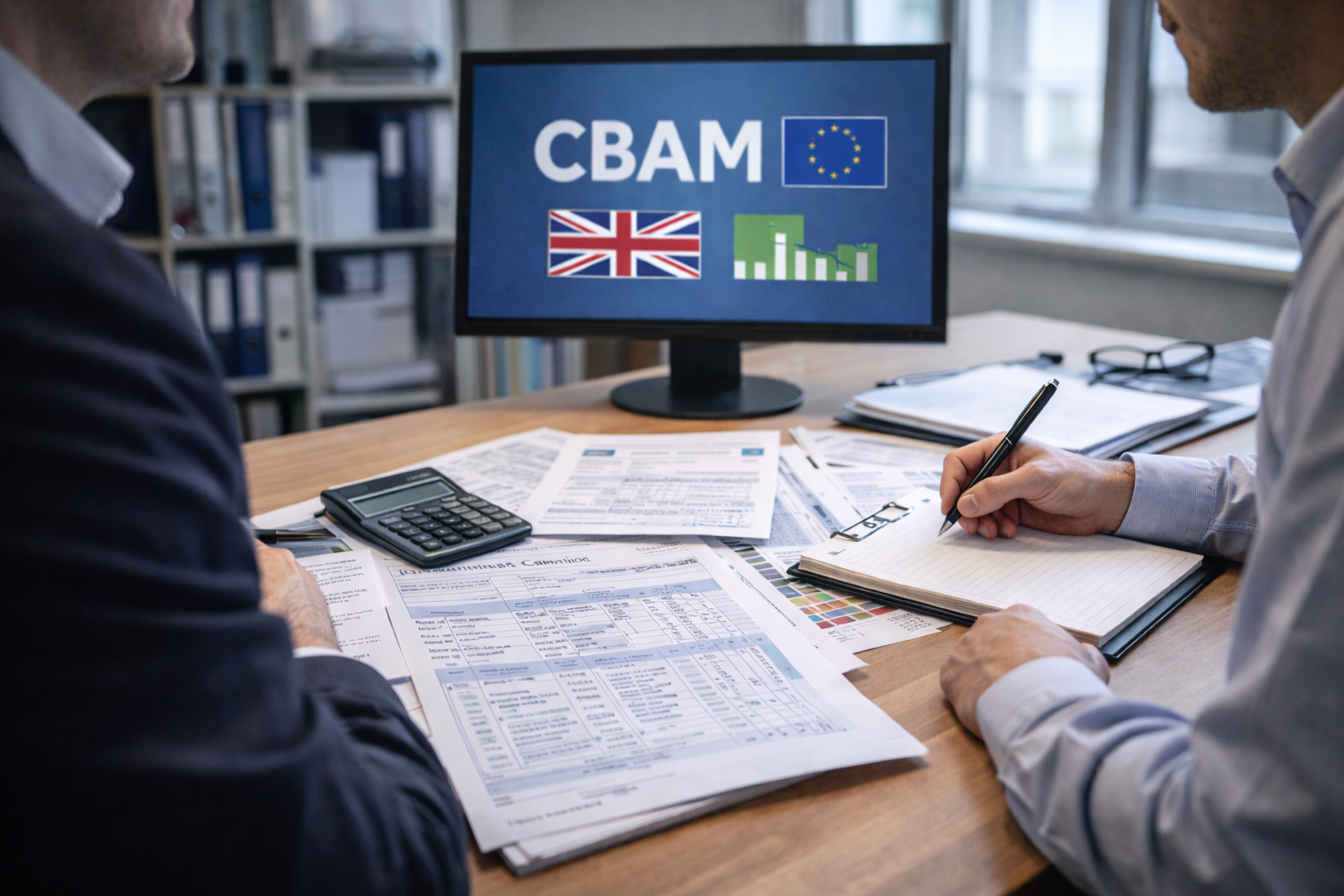

What is CBAM?
CBAM stands for Carbon Border Adjustment Mechanism. It’s a carbon pricing system designed to make sure certain imported goods face a similar carbon cost to goods produced domestically.
The EU introduced its version of CBAM in 2023, with a transitional reporting period running through to the end of 2025 and full financial obligations applying from 2026. The UK is now developing its own version, with UK CBAM due to take effect from 1 January 2027.
For UK importers, the practical question isn’t just what CBAM is. It’s whether the right commodity codes, supplier data and supporting documentation are in place before the obligation begins.
